
Throwing It All Away
The Unfathomable Cost of Chronic Ignorance

In the spring of 2018, the Iran nuclear agreement was doing the limited job it had been designed to do.
That job was often misunderstood, sometimes honestly and often on purpose. Called the JCPOA, it was not built because inspectors had found an active Iranian bomb factory. U.S. intelligence had assessed as far back as 2007 that Iran’s structured nuclear-weapons design program had been halted in 2003. The urgent problem was the uranium route: enrichment levels, stockpiles, centrifuges, hardened facilities, transparency, and time.
The JCPOA had made no attempt to make Iran democratic. It had not made the Islamic Republic benign. It had not ended Iran’s support for proxies, its missile program, its repression at home, or its hostility to Israel.
It had done exactly what it was designed to do: it had disbled Iran’s route to a nuclear weapon, should they decide to pursue one again, and subjected its domestic nuclear power program to limits, monitoring, optimizing, and inspection.
That was the point of the agreement.
Iran nuclear status was not a simple problem before the agreement. Like so many other countries, it had a legitimate civilian nuclear program. That meant it had enrichment capacity. It had centrifuges. It had facilities that worried inspectors and governments. It had a government that gave the world very little reason to relax. It was also hemmed in by sanctions on many fronts, sanctions that were keeping ordinary Iranians poor, hungry, marginalized, and angry.
Nuclear energy is not the bogeyman.
Canada has nuclear power. Canada has research reactors. Canada mines uranium. Canada is now helping lead the western push toward small modular reactors. Like the CANDU before them, SMRs represent an opportunity for Canada to lead internationally in clean energy. None of that makes Canada a nuclear threat.
A country becomes a nuclear threat when it enriches uranium beyond what is needed for civilian energy and toward levels useful for weapons. That is not an abstract concern. It is measurable. It is defined by enrichment levels, stockpiles, centrifuges, specialized facilities, expert personnel, supply chains, waste streams, and time.
It is also hard to hide forever.
There are only so many experts who can build and operate an enrichment program. The equipment is specialized. The materials are traceable. Uranium is watched closely. Facilities, even buried ones, leave signatures. They require power, cooling, parts, maintenance, security, transportation, and people. A country can make detection harder. It cannot make the entire system disappear.
That is why inspectors were an important part of verification.
Before the agreement, the nuclear authorities were not blindly stabbing in the dark. Iran had an enrichment program. It had accumulated nuclear capacity beyond what the international community was prepared to accept on trust. The risk was not that civilian nuclear science existed. The risk was that Iran could use that civilian infrastructure to shorten the time needed to produce bomb fuel.
The JCPOA was structured to remove that potential.
It capped enrichment. It reduced stockpiles. It cut centrifuge capacity. It restricted where enrichment could happen. It removed key equipment from service. It dealt with the plutonium route. It put inspectors inside the system.
It did not ask the world to trust Iran.
It set reasonable standards and the mechanisms to verify those standards.
The Joint Comprehensive Plan of Action — the JCPOA — was the result.
It was finalized in Vienna on July 14, 2015. Six days later, the United Nations Security Council endorsed it through Resolution 2231.
That needs to be stressed. This was not Barack Obama making a quick deal with Tehran. It was a rare alignment among governments that often could barely agree on the weather. The United States, Russia, China, Britain, France, Germany, and the European Union reached the same practical conclusion: Iran’s potential to build a nuclear weapon had to be carefully derailed and deconstructed.
The agreement addressed the machinery of proliferation.
Enrichment level.
Stockpile size.
Centrifuge capacity.
Enrichment locations.
The Arak reactor and the possible plutonium route to a bomb.
Inspection access.
Transparency.
Timelines.
It was focused on the nuclear threat. It did not erase sanctions imposed because of Iran’s missile program. It did not erase sanctions imposed because of terrorism, human rights abuses, or regional aggression. It dealt with nuclear sanctions because those sanctions had been imposed to force a nuclear agreement.
Iran kept the sovereign right to a civilian nuclear power program. In exchange, it accepted strict limits on the parts of that program that could be pushed toward weapons-grade material.
Enrichment was capped at 3.67 percent. That is in the civilian-reactor range, not remotely close to weapons-grade uranium. Iran’s total enriched uranium stockpile was capped at 300 kilograms.
That may sound like a lot, but 300 kilograms of low-enriched uranium is not 300 kilograms of bomb fuel. Even in theory, if Iran tried to turn that stockpile into weapons-grade material, it would end up with only a small fraction of the original mass — not enough for a modern arsenal, and likely not even enough for one reliable modern weapon. To try, Iran would have had to consume its declared civilian stockpile, taking it from their power stations, and make use of centrifuge capacity the agreement had sharply reduced, and do it under a monitoring system specifically designed to notice any moves like that.
The JCPOA addressed each of those.
It reduced the material.
It removed machinery.
It limited enrichment.
It restricted locations.
It monitored reporting.
It put inspectors inside the system.
The International Atomic Energy Agency was not asked to take Iran’s word for it. It was given monitoring and inspection authority to verify whether Iran was complying.
That was the strength of the deal. It did not depend on Iran becoming trustworthy in the eyes of the world. It was built with the assumption, right or wrong, that Iran was not trustworthy.
With compliance and verification, the JCPOA made any serious return to bomb fuel level enrichment slower, more visible, and easier to punish.
Iran’s centrifuge equipment inventory was significantly reduced. Fordow, the hardened underground facility that worried inspectors, was converted away from uranium enrichment. The Arak heavy-water reactor was redesigned to block a practical plutonium route to a bomb. The International Atomic Energy Agency was given monitoring and inspection authority to verify compliance.
These were not symbolic gestures. They were science-backed provisions aimed directly at the nuclear threat. With compliance and verification, they hobbled any attempt to renege on the agreement or bypass its controls.
And it achieved all that without firing a single shot.
But Iran is a sovereign country. It did not accept those limits and inspections for nothing.
The leverage the P5+1 had was sanctions.
For years, Iran had been under layers of sanctions: nuclear sanctions, missile sanctions, terrorism sanctions, human-rights sanctions, and other measures. The JCPOA was a nuclear agreement, so it relieved nuclear-related sanctions after verified nuclear compliance. It did not erase every sanction on Iran. It did not excuse Iran’s missile program. It did not bless terrorism. It did not forgive human-rights abuses. Those sanctions all remained in place.
That matters because the public record is clear. Anyone who reads the agreement and studies the history can see it.
Which is precisely why Donald Trump did not.
Trump told Americans that Barack Hussein Obama had handed Iran billions of dollars from American taxpayers. That was false. Iran regained access to Iranian money that had been frozen or restricted under nuclear sanctions because the P5+1 and the United Nations Security Council considered that an acceptable exchange for verified nuclear limits.
Separately, the United States settled a decades-old legal claim over money Iran had paid before their revolution for American military equipment that was never delivered. That settlement included the original $400 million and interest.
That may have looked politically awkward, but it was not a gift from American taxpayers.
But Trump needed it to sound like one.
He needed the JCPOA to sound like Obama had loaded pallets of American cash and delivered them to the Ayatollah out of weakness and submission. He needed a multilateral nuclear-restraint agreement to become an Obama vanity project. If he could turn it into Obama’s folly, he could add it to the list of Obama-era achievements he was determined to erase.
So he lied about it.
He called it horrible. Disastrous. One-sided. Weak. The worst deal ever.
But he gave no sign that he understood the agreement, the process that produced it, the countries involved, the leverage used, or the concessions won.
He did not explain how he would replace the enrichment cap. He did not explain how he would replace the stockpile cap. He did not explain how he would replace the centrifuge limits, the Fordow restrictions, the Arak redesign, the inspection architecture, or the snapback leverage built into the UN framework.
He did not offer a better plan.
He simply claimed, as he always does with these things, that the JCPOA was broken and useless and only he could negotiate a better agreement. He would negotiate it quickly, without violence or war, and Iran would be eager, if not delighted, to acquiesce to his every demand.
The central facts remain brutally simple.
In March 2018, IAEA Director General Yukiya Amano said Iran was in full compliance and was implementing its nuclear-related commitments. Inspectors were still actively performing their inspections, wherever those inspections may have led. They were not being handed flowers at the airport. It was still Iran. But the inspection structure was working, and the agency responsible for verification had not declared Iran in any material breach.
Two months later, on May 8, 2018, Trump withdrew the United States from the agreement.
Unilaterally.
Unceremoniously.
Without the agreement of America’s partners. Without any finding from the inspectors that Iran had violated the deal. Without the UN Security Council withdrawing its endorsement. Without any replacement for the limits he was about to destroy.
A permanent member of the Security Council simply reneged on a hard-fought strategic agreement negotiated by the P5+1 and endorsed by the United Nations. Iran had been granted real concessions on the understanding that the agreement would endure. They lived up to their side. Those concessions were not meant to be amortized over three years and then discarded because one ignorant president could not be bothered to understand the bargain he inherited.
That is how Trump managed to convert a good deal into a bad deal by sheer stupidity.
Trump simply walked away anyway.
He abandoned America’s partners. He rewarded verified compliance with bad faith. He told every future negotiating partner that the United States could sign an agreement, receive the benefit of that agreement, watch the other side comply, and then discard the deal because the next president was too ignorant, vain, or reckless to honour it.
In the same move, he also threw away leverage.
The 2015 P5+1 had used sanctions and considerable frozen assets to extract nuclear concessions from Iran. That leverage had taken years to build. Once Trump burned the agreement, the sanctions could be reimposed, but the account did not simply reset to where it had been. The United States had already exhausted the leverage. It had received the concessions. Billions of dollars of Iranian money had been returned to the Iranians in exchange for their continuing concessions. The calculus employed by the J5+1 wasn’t based on three years.
It may take decades to rebuild comparable leverage to leverage a comparable set of concessions.
But he also threw away something even more important.
Credibility.
Diplomacy depends on the value of a country’s word. Trump discounted America’s word in public and tried to call it strength and decisiveness.
But that’s not how the world sees it. The world sees America as faithless, and very stupid. Not just adversaries. Allies, partners, and anyone else who might one day sit across a table from the United States.
The message was plain: make a deal with the United States, comply with that deal, and understand that the United States may still walk away without legitimate cause because its political system has no safeguard against a reckless president tearing up the country’s word.
He sent the same message on tariffs. He sent it to almost every country in the world. Then he sent it to Canada and Mexico on CUSMA, the free-trade agreement he authored, endorsed, celebrated, and then attacked as if someone else had smuggled it into law while he was golfing.
After the United States withdrew from the JCPOA and reimposed sanctions, Iran suddenly had less reason to remain inside the limits of the abandoned agreement.
Iran is responsible for Iran’s choices.
But Trump is directly and personally responsible for giving Iran those choices back.
Beginning in 2019, Iran moved step by step away from the JCPOA limits. Enrichment increased. Stockpiles grew. Fordow returned to concern. Inspectors lost visibility over parts of the system. The thing the JCPOA had made slow and visible became faster and harder to see.
The threat returned.
So, early in his second term, just in case, Trump ordered a targeted attack on Iran’s nuclear-enrichment facilities. By his estimation, and Pete Hegseth’s, it was a historic and overwhelming success. Yes, the operation had apparently been advertised on social media before it happened, which used to be considered poor form, but that was a small detail. The strike had destroyed Iran’s nuclear program. Irreparably. Completely. Permanently.
Iran was done.
Toast.
Drinks for everyone.
Except, somehow, the same Iran whose nuclear program had just been destroyed managed to rebuild the whole thing, restore facilities, acquire uranium, enrich it to weapons grade, and develop the means to deliver it, all in a few months. They did this, apparently, about twenty times faster than science allows, while escaping the notice of the same intelligence agencies that had supposedly known enough to justify the first strike.
Remarkable people, those Iranians. Nasty certainly. Terrible neighbours, maybe, but very quick with a centrifuge.
So a few months later, Trump had no choice but to immediately and unilaterally launch an illegal war.
He had to because Israel was going to attack and he needed to beat them to it.
Or because Iran had a fully functional nuclear weapon and was aiming it at Main Street, USA. Yes, that Main Street.
Or because this was regime change, but not the regime change he had promised never to pursue when he was running for president. This was different regime change. Responsible regime change. The good kind. The kind that starts with missiles and ends with people explaining that nobody could have predicted the consequences.
Or because a girls’ school looked like an imminent threat.
Or because it was not a war at all. It was an excursion. Or an incursion. Or a lovely walk in the park with aircraft carriers.
Or because gas and oil prices were getting dangerously reasonable and somebody had to do something.
Whatever explanation was being test-marketed that hour, the result was the same. Trump broke the law, bypassed the constitutional safeguards meant to stand between presidential impulse and war, and brought America into direct conflict with Iran.
He did it without building a coalition. Without preparing allies. Without preparing allied bases. Without preparing American forces for the obvious possibility that Iran might shoot back.
And, inexplicably, the Iranians did not welcome the murder of their children as a diplomatic overture, as Trump predicted they would.
They fought back.
Apparently, of all the things they could have done in response to being attacked, he was not expecting that.
In any case, the history books will record that on February 28, 2026, the United States and Israel launched attacks on Iran.
Trump ordered American military force without the congressional authorization required by the Constitution. The administration will have its legal theories. Administrations always do. But the practical fact is plain: one man ordered the United States into war with Iran, claimed it was not actually a war, and then asked Congress and allied nations to help pay the bill for the war.
As a replacement for the JCPOA, the war killed a great many people who did not play a role in writing nuclear policy.
It killed innocent civilians who lived under Iran’s government, not inside it. It killed people who may have welcomed the JCPOA because sanctions relief meant their country was a little less isolated, their economy a little less strangled, and their future a little less trapped inside the ambitions of zealots.
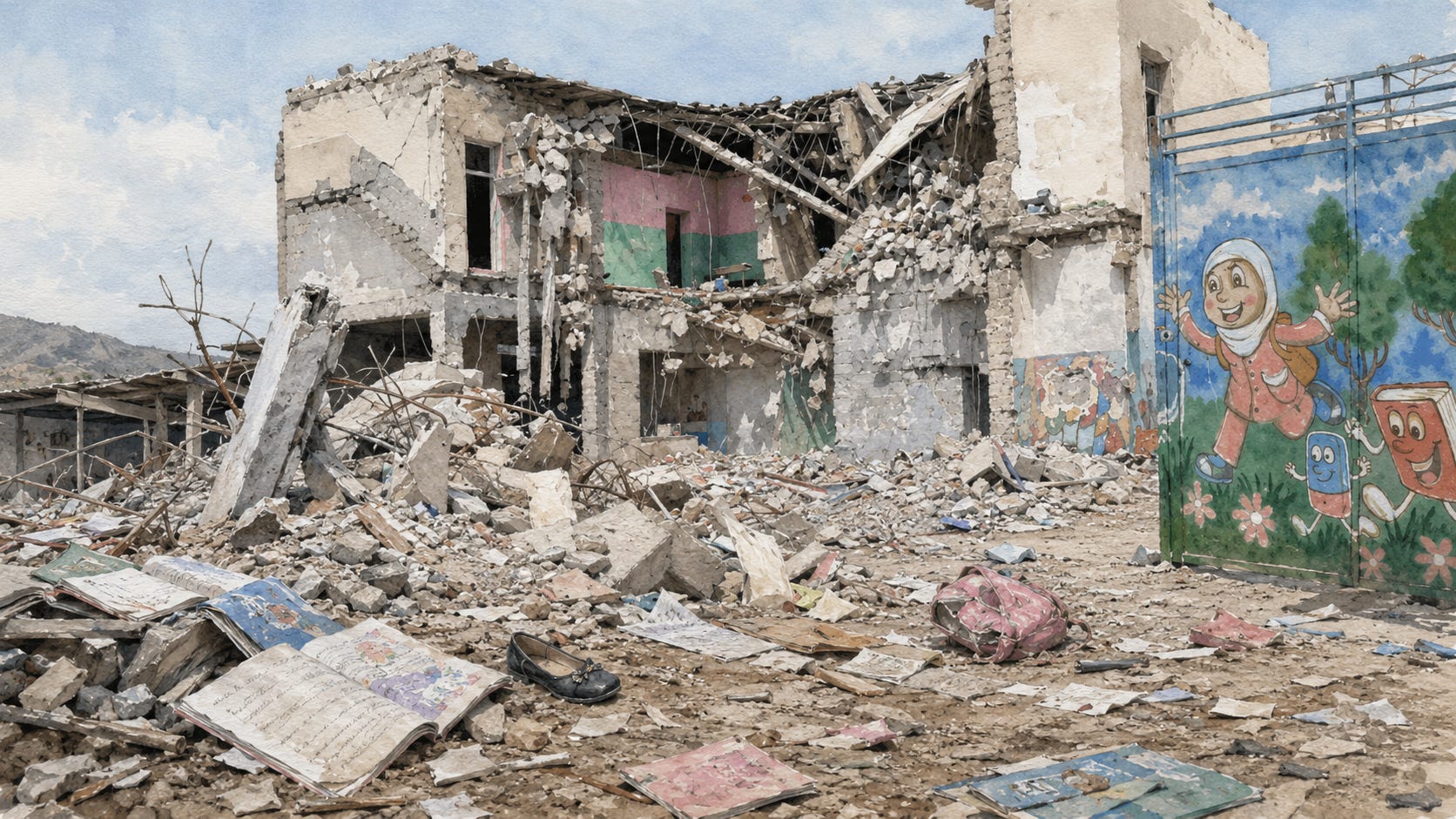
And it killed children
.
The Minab school strike belongs at the centre of this accounting. On the first day of the war, a U.S. missile struck a girls’ school in southern Iran.
A girls’ school.
In a country where educating girls is already an act of defiance against the future men like Iran’s rulers have planned for them. In a country where too many girls are pushed toward marriage before they are allowed to become fully educated women.
More than 175 children and teachers were killed.
Trump first pointed away from American responsibility. It could have been anybody’s missile, he reasoned, that blew up the little girls. Later, as reporting described an internal U.S. military investigation suggesting American forces were responsible, he said it might never be known who was at fault.
But he did not let the murder of little girls spoil the celebration.
Donald J. Trump, reality television star, and Pete Hegseth, Fox News personality and loyal frat boy, had succeeded in killing the Ayatollah and members of his family in their home while the United States was still, technically, in active negotiations with Iran.
So they started a regime-change victory tour.
Then came the problem.
One son had survived. He was considered more radical than his father. He was taking power. And he was not happy.
So the story changed again.
This was not regime change. It was not an imminent-threat war. It was not a war at all, depending on which microphone was nearby. It was not an attempt to murder little girls. It was not a failure of planning, law, intelligence, diplomacy, or basic human decency.
It was something else.
Something important.
Something historic.
Something only Donald Trump could understand.
All because Barack Hussein Obama had supposedly made a lousy nuclear deal, and Donald J. Trump was going to fix it in record time.
On day one.
Just watch.
And he did.
The first day lasted about three months.
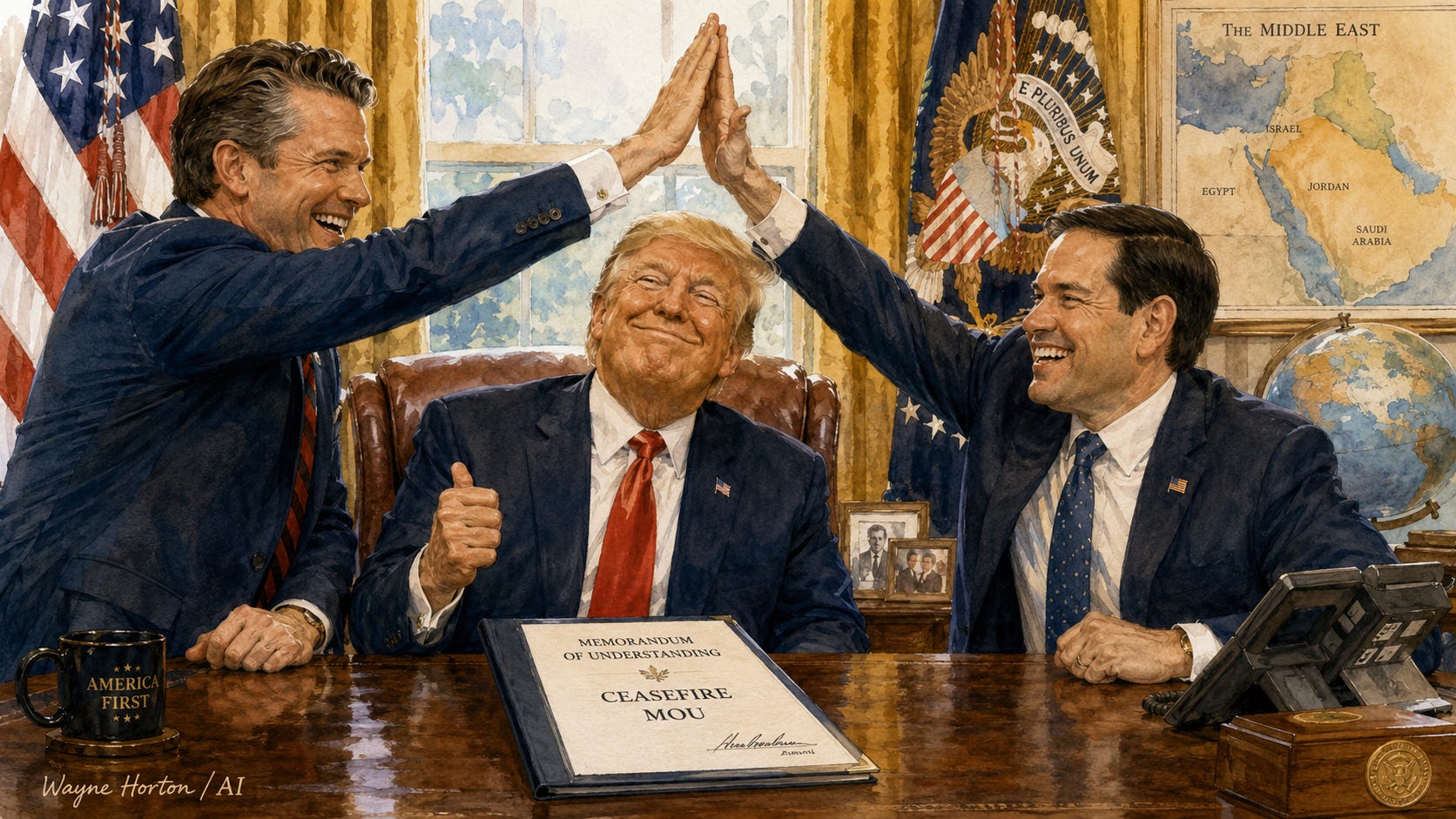
Then, thanks to Pakistan, a country Trump has always seemed to respect as one of the better shithole countries, the parties produced a memorandum. Not a treaty. Not a ratified nuclear agreement. A memorandum. A temporary ceasefire arrangement signed by two of the three parties, with Israel denying it was a party at all, and which almost lasted as long as it takes to say Islamabad Memorandum.
It did not replace the JCPOA.
It mentioned nuclear issues as a topic for future discussion, which is useful in the same way a napkin note that says “fix furnace” is useful when the house is already on fire.
Mostly, it read like a message from Donald J. Trump:
Stop fighting. You’re making me look bad.
Open the Strait of Hormuz. You’re making me look bad.
Stop being so difficult. The Canadians are already making me look bad.
Unfortunately, even a functioning ceasefire agreement, signed and acknowledged by every party, does not undo what war has already done.
It does not bring murdered children back to life.
It does not un-bomb civilian targets.
It does not restore credibility.
It does not return the money spent on an unnecessary war.
It does not remove inflated fertilizer, oil, natural gas, shipping, insurance, and food costs from supply chains that will carry those costs for months, and possibly years.
If Trump had inherited a failing nuclear agreement, fought an unavoidable war, and produced a demonstrably stronger settlement, the argument would still have to account for the dead.
But that is not what happened.
He inherited a working nuclear-restraint agreement. He destroyed it. He ordered a war without Congress. He spent tens of billions of dollars directly, and pushed costs through global markets, energy, shipping, food, insurance, and supply chains that may run north of a trillion dollars before the accounting is done.
And for what?
An interim memorandum of understanding that postpones the actual nuclear question.
A performance piece.
A pause and reload button.
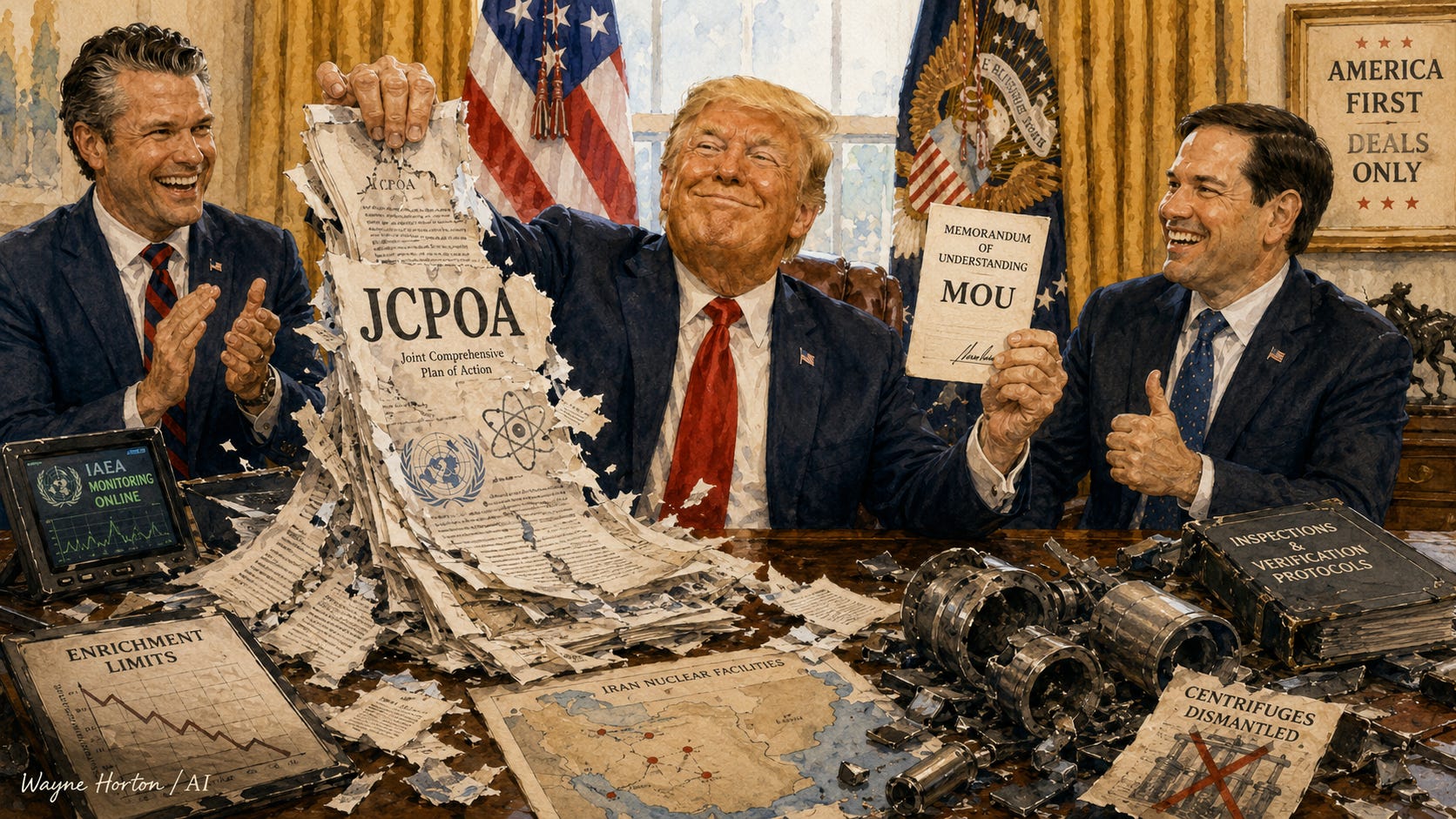
Trump threw away a working agreement, started a war, killed people who did not need to die, and came back with a homework assignment. He couldn’t negotiate a nuclear agreement before he murdered Iran’s daughters, only stupidity accounts for his confidence that he is in a better position to do so now.
Let’s look at the Islamabad Memorandum of Understanding, because this is what Trump wants Americans and the world to celebrate.
It is not a restored JCPOA. It is not a detailed nuclear non-proliferation agreement. In its most charitable interpretation, it is a ceasefire framework, a promise to negotiate a nuclear agreement later, and a desperate plea for Iran to reopen the Strait of Hormuz.
The difference is not subtle.
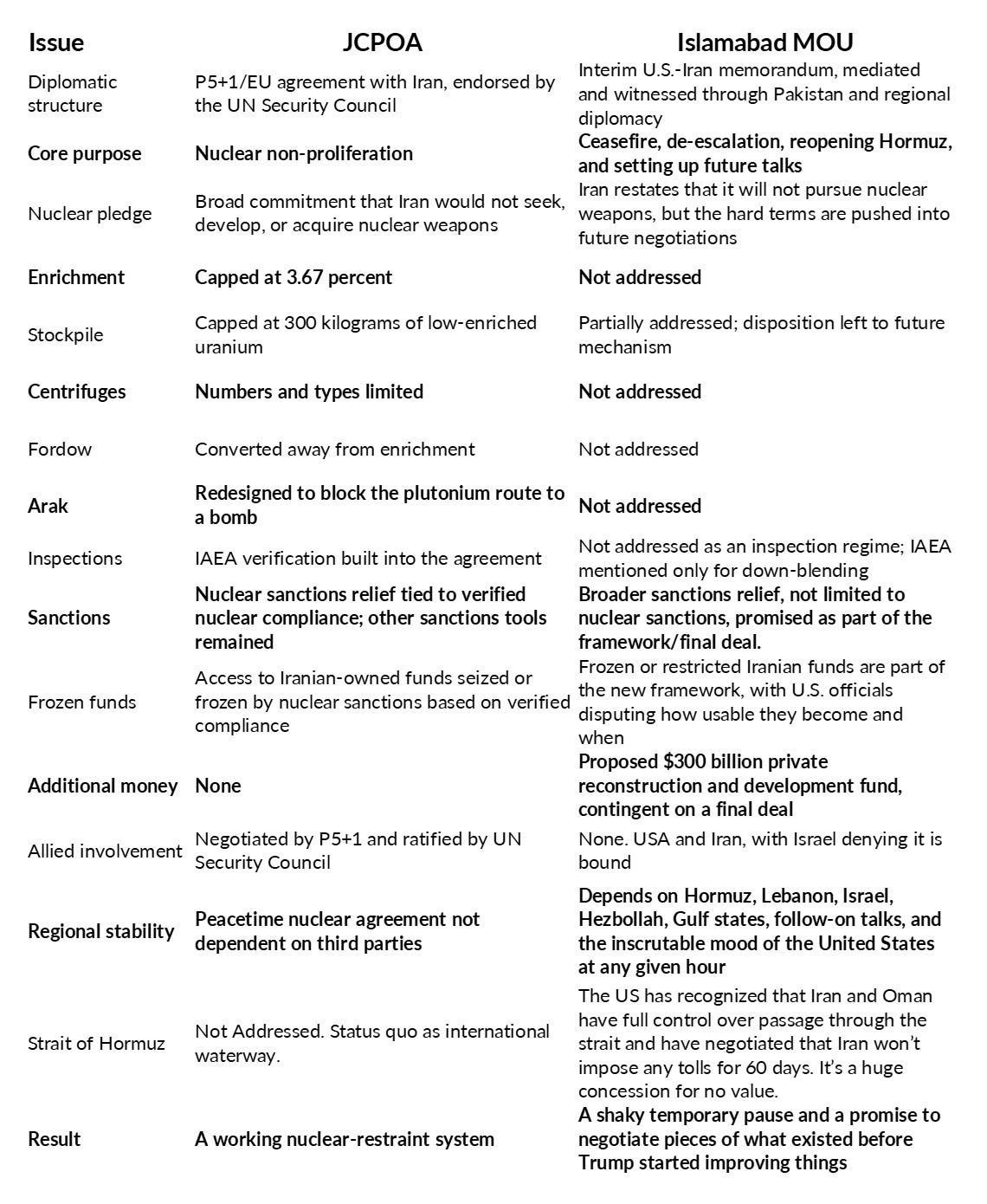
That is the ledger.
That is Trump’s big win.
The comparison is not between a strong nuclear agreement and a weak nuclear agreement.
It is between a nuclear agreement and a ceasefire memorandum that largely ignores the nuclear question.
The deal Trump tore up contained all of the provisions he doesn’t understand but would love to be bragging about now: enrichment limits, stockpile limits, centrifuge limits, Fordow restrictions, the Arak redesign, and verification structures that gave the agreement teeth.
Those are the terms that actually belong in a nuclear non-proliferation agreement.
The JCPOA’s real weakness, as a nuclear agreement, was that many of its hardest limits had sunset clauses. Some expired after roughly ten years. Others ran about fifteen years. That meant the agreement would eventually have to be extended, reaffirmed, or replaced. But as a first step in opening and engaging a closed society while locking down nuclear capability, it was a serious agreement.
An olive branch with checks and balances.
Trump destroyed it because he does not read, does not understand American geopolitics, does not understand Middle Eastern geopolitics, does not understand cause and effect, and does not appear to understand the meaning of words. His incursion was not an excursion, and neither word would make his war less illegal.
He is, objectively, a fundamentally stupid man.
Or, more charitably, he is a reality television star who has not realized this is not a television show, and who is doing his best to portray the stupidest, most corrupt, and most arrogant President of the United States in history.
In which case, forget the peace prize.
Give the man an EGOT!
Stat!
He exchanged a working nuclear non-proliferation agreement for far less than nothing.
But he did manage to do one thing.
He reified Iranian and Omani control over passage through the Strait of Hormuz. Not for a day. Not as a throwaway line. In perpetuity, unless someone manages to claw that recognition back.
The United States could not grant Iran and Oman control over the Strait because it was not America’s to grant. What the United States could do was recognize that control in an official document and negotiate a temporary promise that Iran would not impose tolls for 60 days.
That is what Trump did.
In an official and celebrated document, the United States recognized Iranian and Omani control over one of the most important shipping lanes in the world, something nobody had done, and nobody was ever likely to do, without getting a single tangible concession of any kind in return.
That takes Trump from his self-described status as the greatest negotiator in the history of human civilization to something closer to the worst negotiator in history.
This is a lifetime bonanza for Iran and Oman.
Every tanker. Every cargo ship. Every shipment of fertilizer, natural gas, oil, and food that moves through that chokepoint now moves through a passage Trump helped convert from an international shipping lane into a toll lane.
And he got nothing for it. Not even a working peace agreement.
A quick Google search could have told Trump what every president and world leader before him already seemed to understand.
Oil moves through the Strait of Hormuz all day, every day. So does liquefied natural gas. So does the energy that moves factories, farms, ships, trucks, planes, grocery stores, and homes. Fertilizer prices are tied to energy prices, and fertilizer is tied to food.
I doubt Trump understands that.
I doubt Trump understands that expensive fertilizer grows expensive food. I doubt he understands that when the insurance cost of moving oil through the Strait rises, the cost of gasoline and diesel rises with it. I doubt he understands that diesel moves food, construction materials, medicine, parts, people, and almost everything else that still has to exist in the physical world.
He may, understandably, believe food grows in buffets.
But even he could have Googled enough to learn that nothing moving through the Strait stays isolated from the price of everything else. If the Strait is cut off, prices rise. If ships are delayed, prices rise. If insurers price in war risk, prices rise. If multimillion-dollar tolls are imposed on vessels passing through the Strait, prices rise.
And even if Trump ended the war tomorrow, the damage would not end tomorrow.
Those higher-priced commodities are already in the system. They will move through contracts, shipping, insurance, fertilizer, energy, groceries, airlines, construction, manufacturing, and household budgets for months. Thin-margin companies, large and small, are already being hit. Some are already failing. Industries are already fighting over who eats the cost. Airlines, for example, have cut flights because aviation fuel is expensive and people spending their disposable income on food and gas can’t afford to fly away on vacations.
Trump almost certainly has no idea what a trophic cascade is. He almost certainly has no idea that economies are ecosystems.
Break one part and the damage travels.
His stupid war has already hit one of the cornerstones of every economy: farmers. Someone must have explained at least that much to him, because now he is promising that once he settles this little Iran war thing, he will negotiate a trade pact with Iran.
Think about that.
The parents of murdered girls are supposed to buy food from the country that murdered their daughters.
The country that bombed a girls’ school will sell wheat, corn, soybeans, and meat to the grieving families and call that peace.
Everyone will be happy.
Everyone will be whole.
The dead girls, presumably, will understand that their deaths were a sacrifice that Donald Trump was willing to make so he could try to erase Barack Obama’s name from the deal it was never on.
Trump’s off the sweaty cuff accounting of his stupid, unnecessary war is the number Washington writes down.
The supplemental request. The munitions. The deployments. The classified programs. The ships, aircraft, replacement weapons, maintenance, contractors, hazard pay, and debt service.
No more than a billion dollars a day, they assure American taxpayers. A trifling amount. A fraction of an oligarch’s mad money.
But that is only the first ring.
The next rings move through the world.
A tanker waits.
A ship reroutes.
An insurer reprices risk.
A fertilizer shipment costs more.
A farmer borrows more before planting.
A trucking company pays more for fuel.
A grocery distributor protects its margin.
And a family sees the result at checkout.
They cut back on discretionary spending. They do not go to Disneyland. There probably were not any flights available anyway.
If fertilizer spikes in March and a ceasefire comes in June, the farmer does not get a refund. The cost is already in the crop. Then it is in the yield. Then it is in the food system. Then it is in the grocery cart.
That cost belongs to Trump’s war too.
And not just in America. Those costs rose globally.
In price-inelastic commodities, when global supply drops by twenty percent, prices do not politely rise by twenty percent. They spike. They panic. They compound. A twenty percent shock can become a twenty-five or thirty percent price increase before anyone has finished explaining why this is all very complicated.
But one of the biggest costs for America and the West is not measured in oil, fertilizer, shipping, or food. It will be the very last to recover if it ever does.
It is the damage to American credibility, already battered and bruised by Trump before the first missile flew.
Every adversary watched.
Every ally watched.
Iran watched most closely of all.
Trump showed the world that America could help negotiate a multilateral agreement, benefit from compliance, withdraw without proof of breach, launch an illegal war with stated intentions that violate the UN Charter, and then ask for praise when an infinitely weaker document barely pauses some of the consequences he created.
That lesson will outlast the invoices.
As icing on the cake, he also managed to hand Iran a stronger argument for developing missiles.
Before the war, Iranian missiles were part of the Western case against Iran. Sanctions existed, in part, to deter Iran from developing long-range ballistic missiles because the regime is considered unstable, aggressive, and unreliable.
When the war is actually over, Iran will be able to point to American and Israeli attacks, carried out during negotiations, and say what every state says when stronger powers bomb it: we need a deterrent.
Trump then actually bolstered that argument by suggesting it would be unfair for Iran to have no ballistic missiles if other countries in the region had them.
Israel must have been delighted. … not very.
The Gulf states were definitely not.
They looked at an interim agreement with no substantive nuclear provisions, a 300+ billion dollar reconstruction fund for Iran, unresolved compliance framework for undefined restrictions that are unagreed to, and newly reified Iranian and Omani control over the Strait of Hormuz, and they ignored what Trump was saying. They looked at what he had actually produced.
Not peace through strength.
Not a nuclear agreement.
Not even a credible ceasefire agreement.
An Israel that denies even being party to the memorandum and says it will keep fighting in Lebanon until it achieves whatever its nebulous goals happen to be that afternoon.
But Trump wants credit.
I think he should be given credit.
Not full credit. There is a whole cast of enablers who deserve their share, from family members to Fox and Friends. Pete Hegseth certainly deserves his portion. So does Marco Rubio.
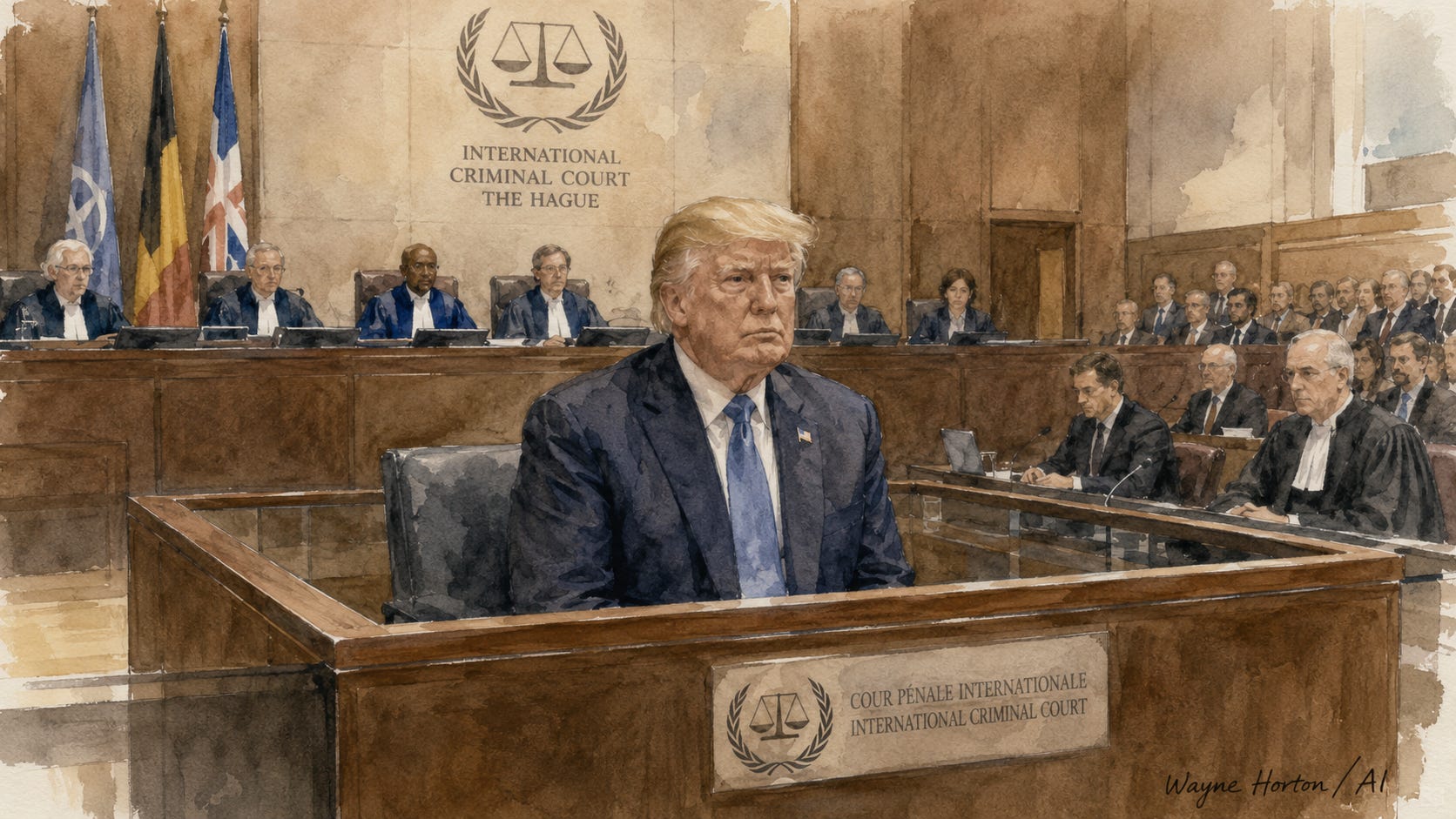
Perhaps we should simply leave it to The Hague to make sure nobody worthy of credit is overlooked.
It is amazing what can happen when you let a profane idiot control the actions and policies of a superpower.
As we move past the era of the American empire and leave Trump to fiddle while it burns, the question is obvious: how did it fall so far, so fast?
Observers of Rome must have asked something similar.
So did observers of the Mongols.
So did observers of the Ottomans.
Whatever the answer, we now know exactly what happens when a country gives a narcissistic sociopath the keys to the kingdom.
The kingdom fails.
Dunning and Kruger weep.
~Wayne
Brilliant essay, Wayne!
The cost of human suffering all over the world is incalculable. Families EVERYWHERE who can’t afford food and fuel now and later. Thank you for the detailed chronology and the FACTS about this whole tragic and preventable story.